When the Family WhatsApp Pings: Digital Habits That Keep Couples Close

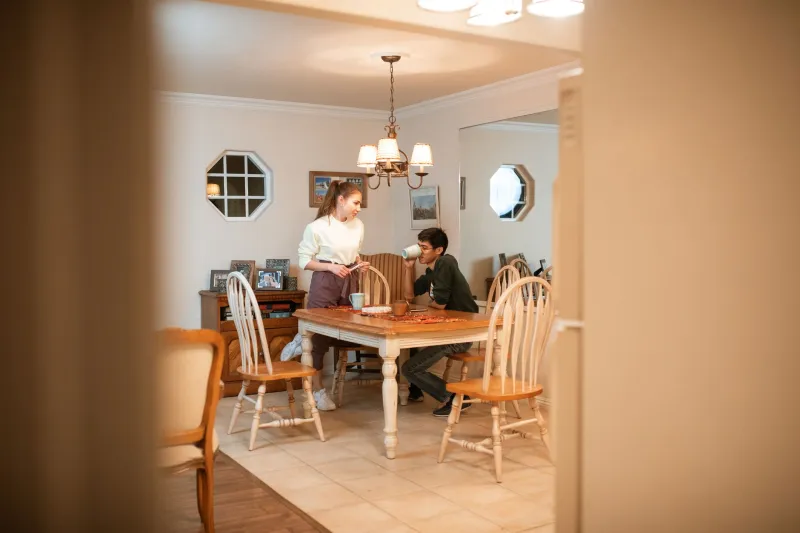
Photo: MiE Fielding , CC BY-SA 2.0, via Wikimedia Commons
Digital life is not the enemy of a good marriage. For most UK couples, phones and laptops are how the week is coordinated, how relatives are kept in touch and how a quiet hour is enjoyed. The difficulty is not technology itself. It is the way small digital habits can crowd out the conversations and silences that a relationship needs.
A full digital detox is rarely realistic, particularly for couples managing work, children and extended family. What follows is a more modest approach: a set of boundaries that protect couple time without demanding a return to the landline era. The aim is not perfection. It is a little more intention.
1. Treat the family group chat as a broadcast channel
Family WhatsApp groups can be warm, useful and exhausting. The stream of photographs, forwarded messages, birthday plans and mild disputes can make it feel as though the extended family is in the room during couple time. One practical boundary is to treat the group chat as a broadcast channel rather than a personal inbox that must be monitored continuously.
Couples can agree when they will check family messages and when they will not. It may be helpful to mute the group during the evening meal or during a shared film. If a relative expects an immediate reply to every message, that expectation can be gently revised. A reply the following morning is rarely a crisis.
2. Give the shared calendar a weekly review
The shared digital calendar is one of the great unsung sources of marital tension. One partner adds a work dinner; the other adds a school event; a third commitment appears from a grandparent. Before long, the week is full and no one remembers agreeing to any of it.
A short weekly review can help. Ten minutes on a Sunday evening, with a cup of tea, is enough to look at the week ahead and flag clashes. The point is not to create a perfect schedule. It is to make the invisible visible before it becomes an argument. Couples who review the calendar together are less likely to feel that plans are being imposed on them.
3. Create a notification-free pocket of the evening
Many couples do not need an entire evening without screens. They need a reliable pocket of time when phones are not competing for attention. This might be the first twenty minutes after the children are asleep, or the half-hour before dinner. The boundary can be simple: phones face down, notifications off, and no scrolling.
It is important that this pocket is realistic. A couple who promise a screen-free evening every night will probably fail by Wednesday. A couple who protect a modest window are more likely to keep the habit. The aim is consistency rather than purity.
4. Agree on a bedside rule
Doomscrolling in bed is a familiar modern habit, and it is not morally worse than reading a novel. The question is whether it leaves room for the couple. Some couples are happy to scroll side by side; others find that the last conversation of the day has disappeared.
A workable bedside rule might be that phones are put away for the final fifteen minutes of the evening. Another might be that one partner charges their phone in another room. The rule should fit the couple, not a magazine ideal. The test is whether it creates a little more space for talking, resting or simply being together.
5. Separate work apps from couple time
Work notifications are particularly intrusive because they arrive with a sense of obligation. A message from a manager or a colleague can feel harder to ignore than a message from a friend. For couples where one or both partners work from home, the boundary between the office and the living room can become very thin.
One approach is to agree on a cut-off point for work apps. Another is to turn off work notifications during agreed couple time and check them afterwards. If a job genuinely requires round-the-clock availability, it is worth naming that reality rather than pretending it does not exist. Couples can then decide together how to protect some space around it.
6. Use a phone basket without making it punitive
A phone basket can be a useful ritual, but it can also feel like a punishment if it is imposed by one partner on the other. It works best when it is framed as a shared experiment rather than a rule. For example, a couple might put their phones in a basket during Saturday breakfast and see how it feels.
Humour helps. A basket with a slightly absurd label can defuse the sense of being policed. The point is not to demonise phones. It is to create a small, visible boundary that reminds both partners that attention is a gift.
7. Schedule a short digital check-in
Many digital disagreements are not really about technology. They are about feeling ignored, interrupted or managed. A short check-in can help. Once a week, a couple might ask: what felt good about our screen habits this week, and what felt crowded?
The questions should be curious rather than accusatory. 'I noticed I was scrolling a lot on Tuesday' is easier to hear than 'You are always on your phone.' The aim is to notice patterns together, not to put one person on trial.
Conversation starters
Couples who want to discuss digital boundaries without an argument can try a few low-stakes openers. 'Which notifications make you feel most pressured?' 'When do you feel most ignored by my phone?' 'Is there a time of day you would like us to protect?' 'What would a realistic screen-free window look like for us?' These questions work best when both partners answer rather than defend.
When to seek help
Digital habits are usually manageable with small adjustments and honest conversation. But if phone use is tied to secrecy, compulsive behaviour, anxiety or persistent conflict, it may be worth speaking to a qualified counsellor. The goal is not to pathologise ordinary modern life. It is to make sure that the relationship has room to breathe.
In 2026, the couple who can set a few gentle digital boundaries is not less connected to the world. They are simply making sure that the world does not always get the best of their attention.