Separate Rooms, Shared Marriage: Rethinking Sleep Arrangements Without Losing Connection
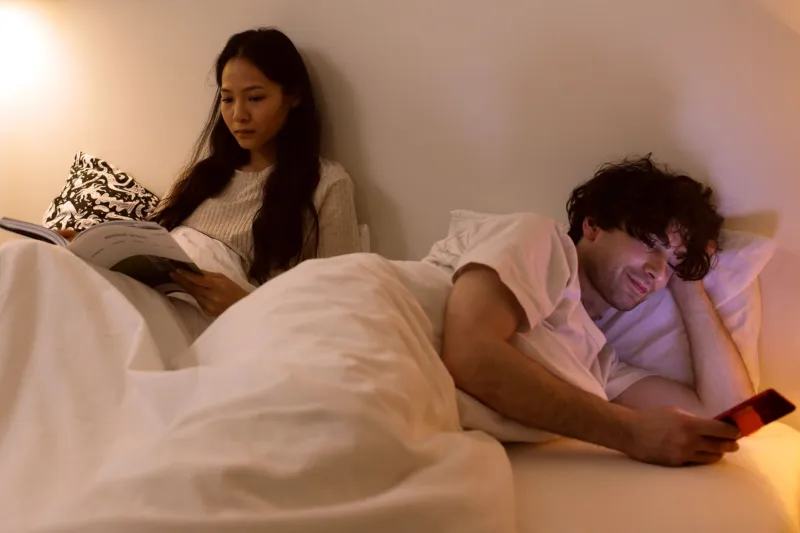
Separate bedrooms were once treated as a quiet admission of failure, or as something that happened to older couples in large houses with spare rooms. In recent years, more UK couples have begun to speak openly about sleeping apart for the sake of better rest. The arrangement is sometimes called a sleep divorce, a phrase that sounds more dramatic than most of the decisions behind it. Snoring, shift work, night feeds, menopause, chronic pain and a restless partner can all turn a shared bed into a site of nightly disturbance. Separate rooms may then look less like rejection and more like common sense.
But sleep is intimate territory. The bed is where many couples talk, touch and repair the day. Moving to another room can relieve exhaustion and still leave one partner feeling exiled. The question is not whether separate sleep is automatically good or bad. It is whether the arrangement is a shared solution to a practical problem, or a quiet way of avoiding a relational one.
The practical case for separate sleep
Sleep deprivation is not a minor inconvenience. It affects mood, concentration, immune function and the capacity to manage conflict. A couple who are both waking repeatedly may find that every conversation is shorter and sharper than it needs to be. In that context, a temporary or permanent move to another room can be a sensible health measure. It can also allow one partner to recover from illness, manage a snoring problem or cope with a work pattern that does not match the other person's.
For some UK households, the practical constraints are real. A spare box room, a converted loft or a sofa may be the only available options. Couples in flats may have less space to create a comfortable second sleeping area. The decision is therefore not merely emotional; it is also shaped by housing, money and health. A good conversation acknowledges those constraints rather than treating the choice as a simple matter of commitment.
The stigma and the silent drift
There is still a social assumption that couples who sleep together are closer, and that separate rooms signal trouble. That assumption can make partners secretive. They may avoid telling family, or make jokes to deflect questions. Secrecy is not necessarily harmful in itself, but it can become a problem if it prevents honest conversation between the couple.
The greater risk is drift. When one person moves out of the shared bed, the small rituals that once surrounded sleep can disappear: the ten minutes of talking before lights out, the morning cup of tea, the casual touch in the night. If those rituals are not replaced, the physical distance may gradually become emotional distance. The couple may still run a household efficiently while feeling less known to one another.
Make it a decision, not a retreat
A sleep arrangement works best when it is chosen together and reviewed. One partner announcing that they are moving to the spare room may solve the immediate sleep problem while leaving the other person to manage a sense of rejection alone. A better approach is to frame the change as an experiment with a purpose.
For example: 'I am not sleeping because of my snoring and I am worried about how tired we both are. Could we try separate rooms for three weeks and see how we feel? I want us to keep our evenings together even if we sleep apart.' This names the problem, proposes a trial and states what will be protected. It also gives both partners a chance to raise concerns.
Boundaries that protect connection
Separate sleep should come with agreements, not assumptions. Couples might decide to keep a shared wind-down ritual, such as sitting together with a drink before bed, or to have breakfast together more often. They might agree that the bedroom is not used as a place of punishment during conflict, and that either partner can ask for a conversation about the arrangement without it being treated as a complaint.
Intimacy also needs explicit attention. If the shared bed was the main setting for physical affection, the couple may need to create other opportunities. That could mean planning time together, being more deliberate about touch, or simply talking about what each person needs. The aim is not to schedule romance mechanically, but to prevent the loss of a bed from becoming the loss of a whole vocabulary of closeness.
Couples with children may need a simple explanation that does not suggest blame. 'We sleep in different rooms because Daddy snores and Mummy needs rest' is usually sufficient for younger children. Older children may ask more direct questions. The answer can be honest without sharing details that are not theirs to hold.
Signs that the arrangement may be masking something else
Separate sleep is not a problem in itself. It becomes a concern when it coincides with a broader withdrawal. Warning signs include a complete absence of physical affection, one partner feeling relieved whenever the other is away, secrecy about the arrangement, or the use of separate rooms to avoid unresolved conflict. If one person is repeatedly asking for closeness and the other is repeatedly declining, the sleep arrangement may be expressing a difficulty that neither has named.
It is also worth noticing whether the decision was genuinely mutual. One partner may agree reluctantly in order to keep the peace. That kind of compliance can breed resentment. A review after a few weeks can help: 'How is this working for you? Do you feel closer or further away? Is there anything we should change?' These questions are simple, but they require a willingness to hear an answer that may be uncomfortable.
When to seek counselling
If separate rooms have become part of a wider pattern of avoidance, or if the couple cannot discuss the arrangement without blame, counselling can help. A neutral third party can slow the conversation down and help each partner say what they fear and what they miss. Counselling is not necessary because separate sleep is unusual. It is useful when the couple cannot tell whether the arrangement is serving the marriage or quietly eroding it.
Sleep is a practical need and a relational one. The most sustainable arrangements are those that treat it as both. Separate rooms can protect a marriage from the damage of chronic exhaustion, provided the couple also protects the small, ordinary moments that keep them connected. The bed may change. The relationship still needs care.
At Love Marriage Specialist, the view is that no single sleeping arrangement defines a good marriage. What matters is whether the choice is shared, reviewed and accompanied by honest conversation.