Before You Say 'We Need to Talk': A Calm Framework for Difficult Conversations
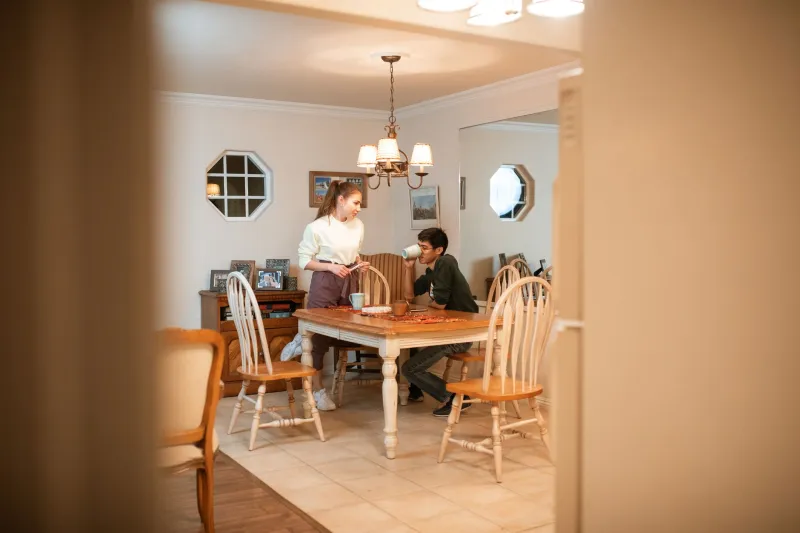
Few phrases quicken the pulse quite like 'we need to talk'. In many UK homes it arrives without warning, usually after weeks of small irritations have been smoothed over for the sake of peace. The intention may be reasonable, but the wording can sound like a summons. One partner hears a complaint before a single concern has been named; the other may already be rehearsing a defence. The conversation then begins in the wrong key, and the original issue is lost beneath the effort to manage the atmosphere.
Difficult conversations are not a sign that a marriage is failing. They are often a sign that two people are trying to keep it honest. The challenge is to raise hard topics without turning the discussion into a row. That requires preparation, timing and a shared understanding of what the conversation is for.
Why the opening line matters
The phrase 'we need to talk' is vague, and vagueness invites anxiety. It signals that something is wrong without saying what, so the other person fills the gap with their worst guess. It also carries an implied verdict: one person has decided that the other must account for themselves. Even when the subject is mundane, such as the division of household tasks or an awkward arrangement with in-laws, the framing can make a practical matter feel like a character assessment.
A more useful opening names the subject and the purpose. For example: 'I would like to find a better way through the money questions we keep circling. Can we set aside half an hour this weekend?' This does not remove discomfort, but it gives the conversation a shape. It also gives the other person a chance to prepare rather than being ambushed.
Prepare before you speak
Before raising a sensitive issue, decide what you actually want from the conversation. Do you want to be heard, to understand your partner's view, to agree a trial change, or to ask for outside help? These are different aims, and confusing them can make the discussion drift.
It also helps to separate facts from interpretations. 'The washing-up was left again last night' is a fact. 'You never think about anyone else' is an interpretation, and it will almost certainly provoke a defence. Try to describe the specific behaviour and its impact: 'When the kitchen is left until morning, I feel resentful because I am the one who clears it before work.' This is clearer and less accusatory.
Timing matters. Late at night, after alcohol, during a rushed weekday morning or just before guests arrive are rarely good moments. A planned conversation in daylight, with phones away and enough time to pause, is more likely to remain civil. If the subject is highly charged, consider a walk or a neutral room rather than the bedroom, which should remain a place for rest and intimacy.
Ask for consent to talk. A simple question such as 'There is something on my mind about the household load. Is now workable, or would later today be better?' respects the other person's capacity. It also reduces the chance that they will experience the conversation as an attack.
A workable script
A script is not a guarantee of calm, but it can keep a conversation from collapsing into accusation. The following sequence can be adapted to money, intimacy, in-laws or household responsibilities.
- Name the care behind the conversation: 'I want us to understand each other better, not to win an argument.'
- State the issue specifically: 'I have noticed that most of the mental load around appointments and school letters falls to me.'
- Describe the impact without blame: 'By Friday I am exhausted and less patient with you than I want to be.'
- Invite the other view: 'How has it felt from your side?'
- Make a clear request: 'Would you be willing to take responsibility for the medical appointments for the next two months?'
- Pause. Let the answer come without interruption.
- Agree a next step and a review point: 'Shall we check in on Sunday evening to see how it is going?'
This structure works because it moves from observation to impact, then to curiosity and request. It does not require either person to agree immediately. It simply makes the problem visible and gives both partners something concrete to respond to.
Phrases that lower the temperature
Certain phrases create room for thought. 'Help me understand how this looks from your side' invites explanation rather than defence. 'I may be missing something' signals humility. 'I am not asking you to agree with me today' reduces pressure. 'Can we pause for ten minutes and come back to this?' gives both people a way to regulate before the conversation becomes harmful.
Other phrases tend to raise the temperature. 'You always' and 'you never' turn a specific issue into a verdict on character. 'Calm down' dismisses emotion. 'With respect' is often heard as its opposite. Sarcasm may relieve tension for one person, but it usually leaves the other feeling belittled. The aim is not to speak perfectly; it is to notice when the conversation has moved from problem-solving to point-scoring and to call a pause.
When a third party can help
Some conversations benefit from a neutral presence. If the same argument returns for months without change, if one partner withdraws whenever the subject is raised, or if discussions about money, intimacy or family boundaries end in contempt, counselling can provide structure. A counsellor does not decide who is right. They help each person speak and listen more clearly, and they can interrupt patterns that are difficult to see from inside the relationship.
There are also circumstances where a third party is not optional. If there is fear, coercive control, financial abuse or any concern about safety, the conversation should not be handled alone. Specialist support services and, where appropriate, the police are the correct route. A marriage counsellor can help with communication, but they are not a substitute for safety planning.
After the conversation
No single discussion resolves a long-standing issue. What matters is whether the couple can return to the subject without the same level of heat. A brief follow-up, such as 'I found that useful, even though it was uncomfortable' or 'I have been thinking about what you said', can build trust. Repair matters more than perfect wording. The goal is not to avoid hard topics, but to make them survivable, and eventually ordinary.
At Love Marriage Specialist, the emphasis is on thoughtful support rather than quick fixes. A calm script will not make every conversation easy, but it can help a couple raise difficult matters before resentment hardens into distance.