The Refilled Nest: A Marriage Compact for When Adult Children Come Home
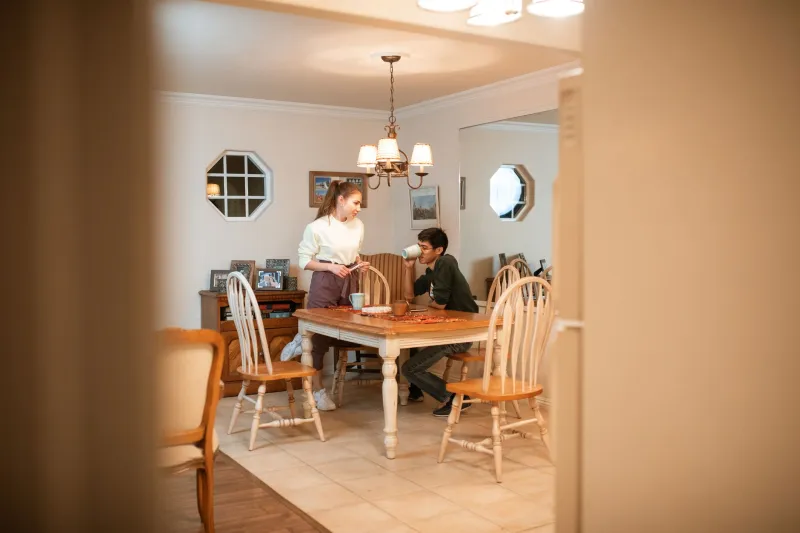
The adult child who comes home is rarely a failure of launch. In the UK’s housing market, with high rents, deposit requirements and insecure tenancies, the family home has become a practical bridge for many young adults leaving university, changing jobs or recovering from a relationship breakdown. But a bridge needs design. Without one, the returning child can become the centre of the household and the marriage can be pushed to the edges.
For couples, the task is not to resist the return. It is to decide, together and early, what kind of return it will be. A compassionate arrangement can be temporary, clearly bounded and respectful of everyone’s needs. A quiet takeover happens when no one names the terms.
Reset the Terms Before the Suitcases Land
The first conversation should happen before the move, not after the first dispute about the bathroom or the washing machine. Sit down as a couple first, then with the adult child. Ask three questions: How long is this expected to last? What will be shared? What will remain private? These are not interrogations; they are the scaffolding of a workable household.
It helps to be specific. Will the child pay rent or a contribution towards bills? Will they buy their own food or join household meals? Who cleans what? Which evenings are the couple’s own? A brief written note—not a legal contract, but a shared reference—can prevent the slow accumulation of resentment. The aim is clarity, not bureaucracy.
Privacy Is Not a Luxury
Couples need privacy that is ordinary rather than extraordinary: a closed door that is respected, a Friday evening that is not automatically surrendered, a conversation that does not have to be conducted in whispers. When an adult child returns, privacy has to be protected deliberately. That may mean agreeing that certain rooms are adult space, that headphones are used, or that the couple’s bedroom remains a boundary even in a busy house.
It also means protecting the marriage from becoming a performance. Parents often slip into entertaining or managing the household as if guests are present. The adult child is not a guest, but neither is the couple’s relationship a background service. A simple rule can help: the couple’s time is scheduled, not leftover.
Money and Chores: The Unspoken Ledger
Money is where goodwill can curdle fastest. UK households are under pressure from energy costs, food prices and mortgage or rent payments. A returning adult child may be saving for a deposit, paying off debt or starting a job. The couple may want to help. But help without a plan can become an unspoken subsidy that one partner resents.
Agree the financial arrangement openly. Decide whether contributions are rent, board or savings held aside. Review it if circumstances change. The same applies to chores. A rota is not a punishment; it is a way of recognising that the household is shared. The adult child should carry a fair share of ordinary tasks, and the couple should not quietly absorb the extra labour.
Resist the Pull of Old Roles
One of the quiet risks of a return is regression. A 24-year-old may become a teenager again in the parental imagination; a parent may begin monitoring comings and goings, offering unsolicited advice or treating the adult child’s decisions as family business. The marriage can then split into two parent-child dyads rather than remaining a partnership.
The corrective is to name the adult status aloud. The returning child is an adult who has the right to make imperfect decisions. The couple are hosts and parents, not wardens. This does not mean indifference; it means respecting the difference between support and control.
The Marriage Beneath the Roof
The couple’s relationship still needs its own life. Keep a regular check-in—perhaps a weekly half-hour—where the question is not “How is the household?” but “How are we?” Arrange time out of the house, even if it is a walk rather than a weekend away. Notice if one partner is carrying the emotional load of managing the arrangement and rebalance it.
It can also help to discuss the return with a counsellor or trusted friend if the couple feels stuck. A neutral perspective can separate practical problems from old family patterns.
A Review Point, Not a Life Sentence
Set a review date from the beginning: three months, six months, a year. The review is not an eviction notice; it is a chance to ask whether the arrangement still serves everyone. Has the child’s financial situation changed? Has the couple’s privacy eroded? Is the original plan still realistic? A return that begins as a bridge should have a visible route off it.
The family home can be generous and still be bounded. When adult children return, the marriage does not have to shrink. It has to be named, protected and included in the plan. A bridge built with care can carry everyone—without asking the marriage to disappear beneath the traffic.